A Family Recipe in the Making: How to Record a Shared Cooking Custom
Record a family recipe as a living custom: capture its remembered details, household variations and familiar phrases without crowning one version the original.
A family recipe is rarely one fixed set of instructions. A pot of soup may begin with the same remembered gesture, then change with the cook, the season, or what is left in the cupboard. To record a family recipe, capture not only ingredients and method but also the choices, phrases, and variations that give the cooking its shared character.
The aim is not to settle an argument about who makes it “right.” It is to make the custom legible while leaving room for different memories. Think of the record as a kitchen table with space for several bowls, not a frame around a single plate.
What makes a recipe a shared cooking custom?
A shared cooking custom is a repeated practice people recognize, even when they do not repeat every detail identically. It might be a dish made for a particular gathering, a way of preparing an ingredient, or a familiar sequence in which one person cooks while another tastes and adjusts.
Look for the parts that people treat as meaningful. Perhaps the dough is mixed by hand because someone learned it that way, or the first serving is set aside for a relative who arrives late. The recipe includes food, but the custom also includes timing, roles, expectations, and the small signals that tell everyone what is happening.
That does not mean every detail deserves equal space. Start with what someone would need to recognize the practice: when it appears, who usually takes part, what happens in broad sequence, and which decisions are left to the cook. Keep the record descriptive rather than ranking one household’s habits above another’s.
How do you begin when people remember it differently?
Begin with separate recollections, not a group vote. Ask each person to describe the dish in their own words before comparing accounts. A shared conversation can quickly turn into a search for the “correct” answer, especially if one confident voice speaks first.
Use prompts that invite sensory and practical detail:
- When does the family usually make this?
- What do you notice first: a smell, sound, texture, or sight?
- Which ingredient or action would you miss if it were absent?
- What do you do by instinct rather than by written instruction?
- Who taught you, and what do you remember about learning?
- What changes when a different person is cooking?
Record the person’s wording as well as the answer. “Cook it until it gives up” may describe a texture more vividly than a formal time instruction. Ask what that phrase means to them, but do not replace it with a polished version before preserving the original wording.
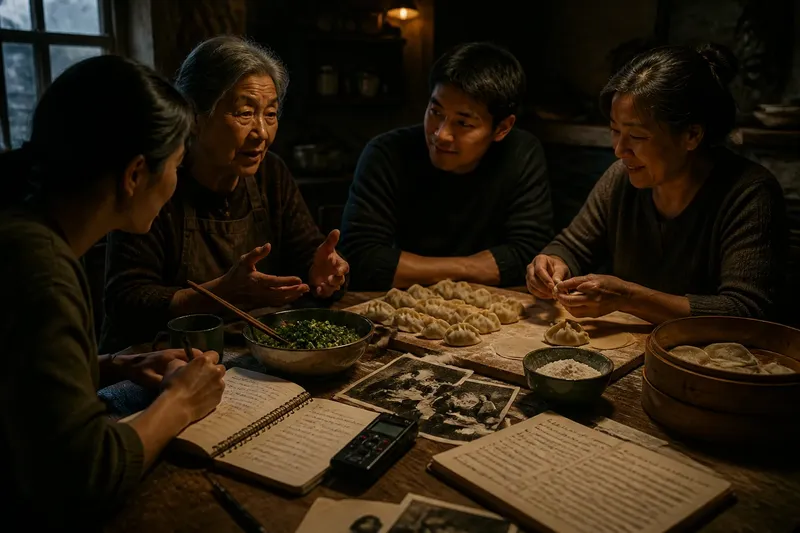
Say you are documenting a family’s weekend dumplings. One cousin remembers cabbage in the filling; another remembers chives and says cabbage came later. Record both recollections with the speaker’s name or relationship, then ask what each version means to that cook. The result is a useful account of variation, not a verdict on which memory wins.
Which details belong in the written record?
Give the reader a practical backbone, then add the details that explain how the custom works. A compact record can include:
- Name: Include the name people use, plus alternate names if they are common.
- Occasion: Note when the dish is made and whether that timing is flexible.
- Ingredients: List familiar ingredients and identify optional or disputed additions.
- Sequence: Describe the order of actions without pretending every cook follows an identical script.
- Sensory cues: Note signs such as softened onions, a toasted aroma, or dough that no longer clings to the bowl.
- People and roles: Record who prepares, tastes, serves, or teaches, if those roles matter to the custom.
- Language: Preserve nicknames, instructions, jokes, and expressions used around the dish.
- Variation: Say what changes between cooks, occasions, or remembered generations.
Keep quantities where people know them, but do not manufacture precision. If a cook says “a handful,” ask whose hand they mean or how they judge the amount. The answer may be that the measure shifts with the batch; that, too, is useful information.
Separate what someone remembers from what they currently do. A person may say that an older relative used a wood-fired oven, while their own version uses a stovetop pot. Those details belong together, but they describe different moments in the custom.
How can you describe variations without choosing a winner?
Present variations as branches of the same practice. Name the cook or household associated with each one when people are comfortable being identified, and specify what changes: an ingredient, texture, preparation order, serving style, or occasion.
Avoid vague labels such as “the traditional version” unless the people involved use that term and explain what they mean by it. “Auntie Mara’s version, as she makes it for winter gatherings” tells a reader more than “the authentic recipe.” It also leaves room for someone else’s version to be just as meaningful.
If recollections conflict, preserve the disagreement plainly. You might write, “Two relatives remember the sauce being stirred in before baking; another remembers it served separately.” Do not silently blend the accounts into a compromise recipe. A smooth, invented middle ground can erase the very difference the record ought to show.
It can help to mark the status of each note: remembered from childhood, used by a particular cook now, or offered as a variation. These labels are not judgments. They help readers understand whether a detail describes personal memory, present practice, or a choice made for a particular occasion.
How do you preserve the words people use?
Write down names and phrases in the language people actually use, including family nicknames for ingredients or tools. If a term has several spellings or an uncertain meaning, note that uncertainty rather than tidying it away. A translation can sit beside the original expression, but it should not replace it without explanation.
Ask follow-up questions that leave room for context: “Who says that?” “When do you use that phrase?” “Does it mean the same thing to everyone?” A term may be affectionate, teasing, or specific to one branch of the family. Its meaning can live in tone and situation as much as in a dictionary definition.
When recording audio or writing someone’s words for sharing, ask permission and explain where the record will appear. Some people may welcome a family archive but not a public post. Their preference is part of how you handle the material, not an obstacle to documenting it.
What questions should you ask before calling it finished?
Should one version be labeled the original?
Only if the people involved have a clear, well-supported reason to use that label. Otherwise, describe each account by its cook, household, or remembered context and leave the question open.
What if nobody remembers exact amounts?
Record the quantities people can describe and the cues they rely on, such as a dough’s feel or a sauce’s thickness. Mark uncertain amounts as approximate rather than supplying numbers that no one gave you.
Can a family recipe include changes made for present-day needs?
Yes. Note the current adaptation separately from remembered versions, and explain what prompted it if the cook wishes. This keeps the record useful without implying that change cancels the custom.
How should you handle a detail nobody agrees on?
Attribute the different recollections and say that they differ. A record can be complete enough to be useful without forcing agreement on every ingredient or moment.
How can you make the record useful to the next cook?
Arrange the material so someone can cook from it and understand its context. Put the clearest shared sequence in one section, then place variations and attributed memories beside it. A short note about the occasion can prevent a reader from mistaking a special-occasion dish for an everyday meal.
If the record includes photographs, captions should identify what they show without pretending an image explains everything. A picture of hands folding pastry may show the shape, but not the pressure, pace, or phrase a relative uses while teaching. Add those details in words when someone can supply them.
Leave a clear place for later additions. A family’s cooking custom may shift as relatives move, ingredients change, or new cooks join. Include a date or note describing when an account was recorded if that helps distinguish present practice from older memories; the date is a marker, not proof that the custom stopped changing.
A good record of a family recipe lets the next cook see both the shared pattern and the choices that remain open. To record a family recipe well, preserve the remembered details, the kitchen language, and the differences people can explain. The most useful page may be the one that makes room for another cook to add a note in the margin.